
If you've tried a brightening serum before — maybe more than one — and the dark spots faded a little, then crept back a few months later, you're not imagining it. And it's not because your skin is "difficult," or because you didn't use it consistently enough. It's because of something dermatology researchers have been quietly flagging for years: most pigmentation products only interrupt one half of a two-part process.
Dark spots — whether from sun exposure, old acne marks, or simple age — don't appear because your skin makes "too much" pigment in some vague sense. They appear because of two separate biological steps happening back to back. Attack only one, and the other quietly keeps the spot alive.
The Two-Step Problem Nobody Explains
Step one: specialized cells called melanocytes produce melanin — the pigment responsible for skin color — using an enzyme called tyrosinase. Step two: that pigment is physically transferred into the surrounding skin cells, where it becomes visible as a spot.
Most mainstream brightening products focus almost entirely on step one — slowing pigment production. That's a reasonable start. But if the pigment that's already been made still gets transferred to the surface efficiently, existing spots barely budge, and new ones can still show up.
The Numbers Behind the Frustration
Figures reflect published ingredient research summaries and consumer-reported skin surveys; individual results vary.
Meet the Two-Step Approach: The Éclat Dual-Path Method
This is the part that finally reframed things for me. A small but growing number of formulators have started building serums around what's being informally called a "dual-path" approach — addressing pigment production and pigment transfer at the same time, instead of choosing one.
How the Éclat Dual-Path Complex™ Works
Rather than relying on a single brightening agent, this approach pairs two ingredients that work on different steps of the pigmentation process — so a spot is addressed from two directions instead of one.
A tyrosinase-inhibiting compound helps slow new pigment production at the source, before it has a chance to form.
A second ingredient works to help interrupt the transfer of existing pigment to the skin's surface, so spots that have already formed have a better chance of visibly fading with continued use.
To be clear — this isn't a "cure," and no serum, dual-path or otherwise, works overnight. Skin cell turnover takes weeks, not days. But the logic of addressing both steps instead of one is the piece that's been missing from most single-mechanism products on the shelf.
What This Looks Like in a Real Product
One of the more accessible formulations built around this two-step logic is a serum from a small skincare label called Aurélle, which pairs niacinamide (which supports the pigment-transfer step) with kojic acid (a well-documented tyrosinase inhibitor that targets the production step). It's currently sold as the Lumière Serum.
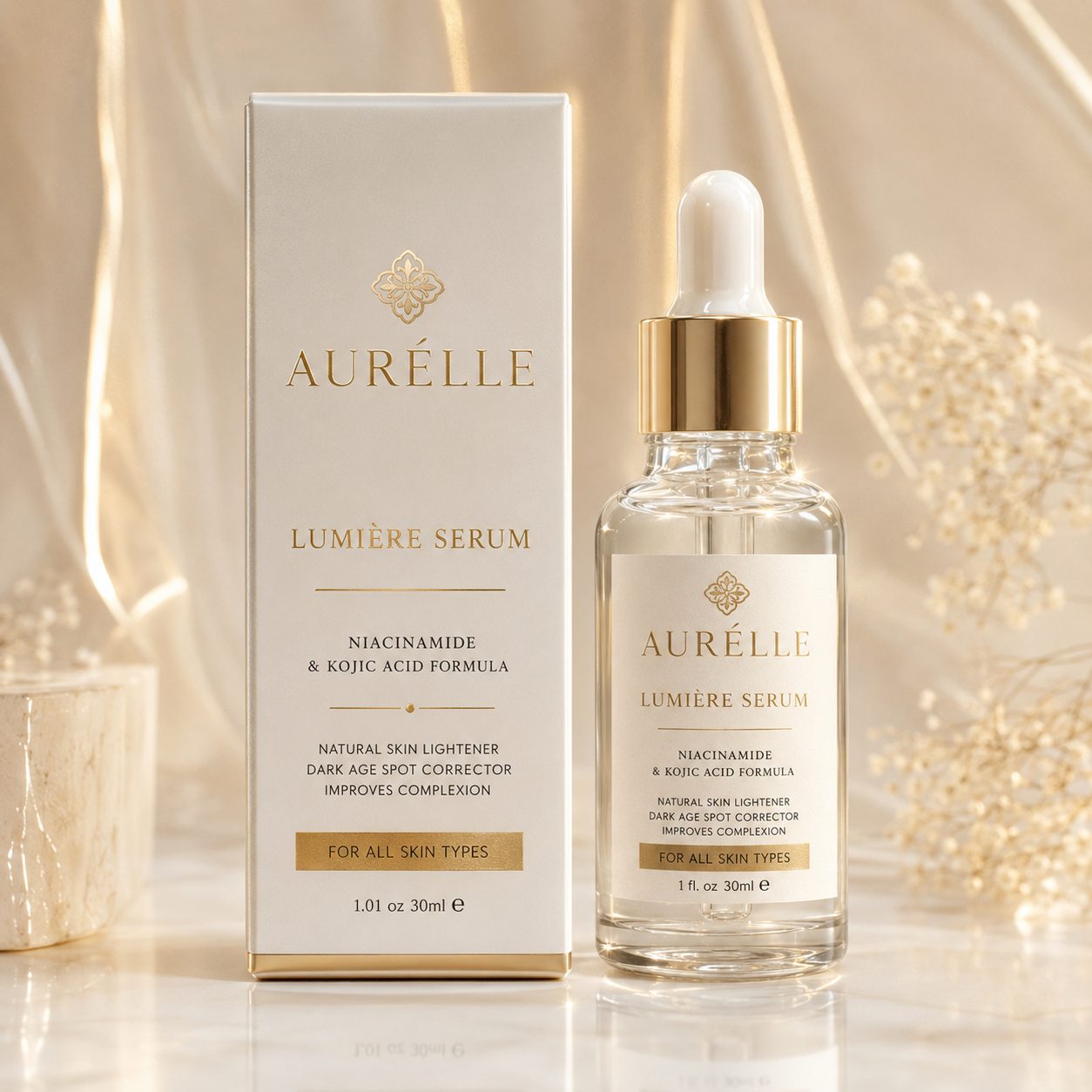
Aurélle — Lumière Serum
Niacinamide & Kojic Acid dual-path formula · 30ml · For all skin types
See Full Details & Availability →What Readers Are Saying
Should You Try It?
If you've been using a single-mechanism brightening product for months without the results you expected, it may not be a "you" problem — it may simply be an incomplete mechanism. The dual-path logic at least addresses the full picture: production and transfer.
Availability on the Aurélle Lumière Serum has been inconsistent as word has spread — the brand currently ships direct with cash-on-delivery available in most areas, and multi-bottle packages are discounted for readers who want to commit to a full 8–12 week cycle (the window most consistently cited in the research above).
This is a sponsored editorial feature. Results are not guaranteed and vary by individual. Statements have not been evaluated to diagnose, treat, cure, or prevent any disease. Consult a dermatologist for persistent skin concerns.
Reader Comments (12)
Finally an explanation that made sense to me. I always wondered why my spots would fade then sneak back a few months later.
Ordered the one mentioned in the article out of curiosity. Will report back after a few weeks of using it.
The transfer-inhibition point is under-discussed in mainstream skincare marketing. Worth understanding before choosing a brightening product.